MONDAY, NOVEMBER 3, 2003

UTSA Recital Hall, 1604 Campus

7:30 pm   FREE and open to all

New Music Series Concert

Electronic and Computer Music


Tentative program – program changes and more detailed information will be forthcoming


Steve Reich (b. 1936): Pendulum Music (1968) ca. 5'

for three or more microphones, amplifiers,  loudspeakers

James Balentine, David Sebald, Mark Rubinstein, & Jack Stamps, microphones


Bruce Hamilton (b. 1967): stunts&traces1  (1998) 1’20”

computer music


Jack Stamps (b. 1969): How Did I Get Here? (for soprano and tape, op. 8) 4’
from the forthcoming opera Bud Jones

Rebecca Knox, soprano


Rodney Waschka II (b. 1958): Interlude #4: Clementine Variations (2002) 1’

electronic computer music


Allan Schindler, Composer, Stephanie Maxwell, Film maker: Time Streams (2003) 5’30”

film/musical composition


Art Gottschalk (b. 1958): Syrenes   7’04”

computer music


David Heuser (b. 1966): Cúchulainn's Warp-Spasm  (2001) 6’30”

for speaker, computer music, and effects

Moumin Quazi, speaker


John Gibson (b. 1960): Thrum (1998) 9’

computer music


Mark Phillips (b. 1952): Rain Dance (1993) 12’

for flute and tape

Rita Linard, flute


Bruce Hamilton: Moto (1998) 7’15”

computer music


Frank Zappa (1940-1993): G-Spot Tornado (1986) 5’

computer music


PROGRAM NOTES:


Steve Reich has been called "…America’s greatest living composer," “...the most original musical thinker of our time,” and “...among the great composers of the century.” From his early taped speech pieces It's Gonna Rain (1965) and Come Out (1966) to his creation and work with his ensemble, Steve Reich and Musicians, to his recent works such as the digital video opera Three Tales (2002), Mr. Reich's path has embraced not only aspects of Western Classical music, but the structures, harmonies, and rhythms of non-Western and American vernacular music, particularly jazz.


Pendulum Music is a classic example of Reich’s early process pieces – elegantly simple in its design, with an inevitable outcome, each performance is specifically unique and yet generally predictable.


Bruce Hamilton was born near Philadelphia in 1966, and grew up in New Jersey. He holds degrees in Composition and Percussion from Indiana University, where he received the Performers Certificate, the Dean's Prize in Composition and the Cole Porter Memorial Composition Scholarship. His works are published by Non Sequitur Music and are widely performed at conferences, festivals, and recitals in the US and abroad. His pieces Interzones, Moto, and Wintermute are available on CD on the SEAMUS and Mark labels. Hamilton has received honors, awards and commissions from ALEA III, AMC, ASCAP, PAS, ACF, Barlow Endowment, Carbondale Community Arts, National Society of Arts and Letters, Pittsburgh New Music Ensemble, Russolo-Pratella Foundation, and SEAMUS. Hamilton is currently a Lecturer in Music Theory at Western Washington University, where he also co-directs the electroacoustic music program.


Hamilton is currently Assistant Professor of Music at Western Washington University, where he teaches music theory, composition, electroacoustic music, and co-directs the Contemporary Chamber Players. He lives in Bellingham, where in his treasured spare time he enjoys reading, computing, watching films, and a just a tiny bit of gardening.


Moto was completed at the Indiana University Center for Electronic and Computer Music in 1998. The title refers to the motor rhythms (real or implied) which drive a few simple melodic ideas through a variety of sonic environments. Moto was commissioned by the Society for Electro-Acoustic Music in the United States (SEAMUS) with funding provided by the American Society of Composers, Authors and Publishers (ASCAP).


Born in 1969 in San Antonio, Texas, Jack Stamps has pursued music since the day his parents claim he could sing the lyrics to “Hey Jude” before he could speak. Whatever. For nearly a decade, he was a songwriter in a local band and pursued a solo career thereafter. Presently, he is enjoying a return to The University of Texas at San Antonio, where he studies composition with Drs.  James Balentine and David Heuser. There, his pop and classical influences converge on paper. He has written pieces for the UTSA Wind Ensemble, the Tosca String Quartet, clarinetist Stephanie Key, the UTSA Women’s Choir, among others. He graduates in December, 2003 with plans of pursuing graduate studies in composition. He is currently working, perhaps too slowly, on sketches for an electro-acoustic opera.


How Did I Get Here?
Text by Jack W. Stamps with assistance by Molly Fahrenschon

How did I get here?
How did it come to this?
Let's see…it started with a wonder of if it is there…
Then suddenly a foot in the ribs…this all looks like a series of blurry, weekly snapshots…

There's a curious feeling. I want her here. I think of it as if
I am picking her up at the bus station. I know she's there but I
Also have a curious sense of her not being 'here'.

 I'll drive slower…

Been reading a lot. Deciding on squatting. Pictures of ancient artifacts
Of women in that pose…using gravity to guide her….and all of my energy to
Paint a tempting bulls-eye on the earth.

Elation and terror at the same time…
Alone and with family…all at the same time…

What if she wants to see him?

Preps begin in the kitchen again…the smell in the air reminds
Me of something  a friend emailed me…."birthing smells like ham"

Considering names. I know a little girl named aria. What a lovely name… Aria.

Will I pick up my music studies again….?
high hopes and low blows…here I am…rolling silverware for 2…
do these feelings course through her veins as well?
Do I feel her singing…………?


Rodney Waschka, composer, is best known for his algorithmic compositions, intermedia pieces, as well as music for traditional ensembles. His works often include electronic computer music or other media: visuals, theater, poetry. Waschka studied at Brooklyn College, at the Institute of Sonology in the Royal Conservatory of The Netherlands, and at the University of North Texas where he received his doctorate. He teaches at North Carolina State University.


Clementine Variations is the fourth interlude from the chamber opera Saint Ambrose, which is based on the life of Amborse Bierce. The source material for this short work is the singing voice of the then eight-year-old Andre Kurepa Waschka.  The coda is provided by his, at that time, four-year-old sister, Lana.


Stephanie Maxwell is an Associate Professor in the School of Film and Animation at the Rochester Institute of Technology in Rochester, New York. Her teaching includes courses in film, video and animation production (including experimental processes), and history of animation. She has curated and presented film programs internationally and taught abroad on several occasions. Ms. Maxwell has been producing her unusual animated works for over 15 years. Numerous exhibitions of her work include international film, multimedia, and television programs and festivals. Her works have been collected by museums and universities as works of art. Her husband, Allan Schindler, is a Professor of Composition in the Composition Department of the Eastman School of Music, and also Director of the Eastman Computer Music Center. Schindler's musical compositions, evenly divided between purely acoustic works and those that include or feature computer music resources, have been performed by leading soloists and ensembles throughout North America and Europe, as well as in Asia, Australia and South America. Several of his compositions are available in commercially released compact disc recordings. Schindler currently serves as co-director and producer of the yearly ImageMovementSound Festival, which sponsors the creation and presentation of innovative collaborative works incorporating music, film and dance.


Time Streams: The spiral-like structure and unbroken momentum of this film/musical composition are somewhat suggestive to the artists of intersecting streams (or 'ribbons') or time. The concept is not simply the familiar (although perhaps illusory) linear 'march' of clock time, but rather a nexus in which backwards time (e.g., dreams, recollections and deja vu), parallel temporalities, and the non-contiguous splicing together of segments of time are equally prominent and "real." The principal sound sources of the music are generic samples (digitized recordings) of instrumental and vocal tones and of environmental sounds such as ice cubes and ping pong balls. However, in resynthesis the spectral structures (tones colors) of these sounds often have been retooled and their attack and decay articulations have been altered. The visuals are animations and manipulations of hand-painted 35mm motion picture film, small objects and liquid mixtures that are extensively interwoven and layered in digital post production.


Arthur Gottschalk was born in San Diego, California, but raised in the Northeast. He attended the University of Michigan at Ann Arbor where, after two years in the pre-med curriculum, he changed career paths, receiving a Bachelor of Music degree in Music Composition, a Master of Arts degree in Music Composition and English Literature, and his Doctorate in Music Composition (cognate: Computer Science), studying with Ross Lee Finney, Leslie Bassett, George Balch Wilson, and William Bolcom. He is currently a Professor at Rice University, where he is Chair of the Department of Music Theory and Composition, and Director of its Electronic and Computer Music Laboratories. In 1986 he co-founded Modern Music Ventures, Inc., creating a company which held a recording studio complex, a record production division under contract to Capitol/EMI, four publishing firms, and an artist management division. In 1998 Gottschalk divested himself of these latter holdings, in order that he might devote himself more fully to music composition.

Gottschalk's teaching specialties include electronic music, music theory, music composition, and counterpoint. He is responsible for teaching occasional eight-week CLE seminars on music business and law at Rice, and lectures on these subjects at the Art Institute of Houston as well. In 1999 and 2000 he has been awarded grants from the Hewlett Foundation to develop and co-teach (with Michael Carroll) seminars in acoustics. He is a recipient of the Charles Ives Prize of the National Academy of Arts and Letters and annual ASCAP Awards since 1980, among other awards, and has been a Composer-in-Residence at the famed Columbia/Princeton Electronic Music Center. His music is recorded on Crystal, Summit, Golden Crest, Crest, and Orion, and is published by Seesaw Music, Shawnee Press, Ballerbach Music, and Shark Communications (ASCAP). His book, Functional Hearing, was released in the Fall of 1997 by Ardsley House Publishers, New York, and is now published by Scarecrow Press, a division of Rowman & Littlefield.

Syrenes was composed using the opening harmonies of the jazz standard “What are You Doing (For the Rest of Your Life).” The notes were fed into my sefl-programmed algorithmic composition software, MTPlus, and rearranged and reassembled until the desired polyphonic texture was achieved. This texture was then treated in other programs (MAX, ProTools) such that each note and vertical simultaneity slowly evolves into the next. The resultant piece is reminiscent of the sirens’ calls that lure sailors onto the rocks, hence the title.


David Heuser's music has been performed by various groups and individuals and on festivals and conferences throughout the US and abroad. He has won a variety of awards, grants and commissions including an ASCAP Young Composer Award, many ASCAP Standard Grants, a First Music commission from the New York Youth Symphony, and the Delius Composition Contest Chamber Music Award.

A product of New Jersey, Heuser’s degrees are from Eastman and Indiana University, and his teachers include Samuel Adler, Claude Baker, Joseph Schwantner, David Liptak, Warren Benson, Frederick Fox, Wayne Peterson and Don Freund. He currently resides in San Antonio, where he is an Associate Professor at the University of Texas at San Antonio. Heuser's music has been recorded on the Albany Records, Capstone, and Equilibrium labels.


Cúchulainn's Warp-Spasm

Text from The Tain, translated by Thomas Kinsella

from the Irish epic Táin Bó Cuailnge

reprinted with kind permission of the translator


The first warp-spasm seized Cúchulainn, and made him into a monstrous thing, hideous and shapeless, unheard of.


His shanks and his joints, every knuckle and angle and organ from head to foot, shook like a tree in the flood or a reed in the stream. His body made a furious twist inside his skin, so that his feet and shins and knees switched to the rear and his heels and calves switched to the front.


The balled sinews of his calves switched to the front of his shins, each big knot the size of a warrior's bunched fist. On his head the temple-sinews stretched to the nape of his neck, each mighty, immense, measureless knob as big as the head of a month-old child.


His face and features became a red bowl: he sucked one eye so deep into his head that a wild crane could not probe it onto his cheek out of the depths of his skull; the other eye fell out along his cheek.


His mouth weirdly distorted: his cheek peeled back from his jaws until the gullet appeared; his lungs and liver flapped in his mouth and throat; his lower jaw struck the upper a lion-killing blow, and fiery flakes large as a ram's fleece reached his mouth from his throat.


...Malignant mists and spurts of fire... flickered red in the vaporous clouds that rose boiling above his head, so fierce was his fury...


The hero-halo rose out of his brow, long and broad as a warrior's whetstone, long as a snout, and he went mad rattling his shields, urging on his charioteer and harassing the hosts.


Then, tall and thick, steady and strong, high as the mast of a noble ship, rose up from the dead center of his skull a straight spout of black blood, darkly and magically smoking...


In that style, then, he drove out to find his enemies and did his thunder-feat and killed a hundred, then two hundred, then three hundred, then four hundred, then five hundred...


Text © Thomas Kinsella 1969


Note:

The music for Cúchulainn's Warp-Spasm was composed and realized at the University of Texas at San Antonio's Electronic Music Studio, with the kind support of a grant from the College of Liberal and Fine Arts of the University of Texas at San Antonio. Special thanks to Gerald Seminatore and John Goodman for the use of their voices. And many thanks to Thomas Kinsella for providing the inspiration.


John Gibson's acoustic and electroacoustic music has been presented in the US, Europe, South America and Asia. His instrumental compositions have been performed by many groups, including the London Sinfonietta, the Da Capo Chamber Players, the Seattle Symphony, the Music Today Ensemble, Speculum Musicae, Ekko!, and at the Tanglewood, Marlboro and June in Buffalo festivals. Presentations of his electroacoustic music include concerts at the Seoul International Computer Music Festival, the Brazilian Symposium on Computer Music, the International Biennial for Electroacoustic Music of Sao Paulo, Keio University in Japan, the Florida Electroacoustic Music Festival, and several ICMC and SEAMUS conferences. His A Bao A Qu is recorded by the New York Camerata on the Centaur label. His electroacoustic piece, Thrum, appears on a CD from the Virginia Center for Computer Music, as volume 29 in the CDCM series. Thrum received a Finalist Prize in the Bourges 26th International Electroacoustic Music Competition. Among his grants and awards are a Guggenheim Fellowship, a Charles Ives Scholarship from the American Academy and Institute of Arts and Letters, two ASCAP Foundation Grants, and the Paul Jacobs Memorial Fund Commission from the Tanglewood Music Center. He writes sound processing and synthesis software, and has taught composition and computer music at the University of Virginia and Duke University. He is now Assistant Director of the Center for Electronic and Computer Music at Indiana University.


I began work on Thrum by recording a wide range of sounds played on my acoustic guitar. As I worked with this material, I started to explore a continuum between natural plucks and their radical transformations and synthetic counterparts. I shaped these sounds into contrasting scenes. The first establishes a brisk pulse that forges ahead until it suddenly collapses. The focus shifts to a sustained, raspy bass - a magnified image of the lowest guitar string. A dreamy, swirling texture eventually washes over this. The initial pulse then returns with a percussive twist, and the piece ends with memories of the opening, submerged by a relentless low roar. Many of the guitar textures were created by a virtual player implemented in RTcmix, a scriptable package of programs for processing and synthesizing audio in real time. (RTcmix runs under Linux, Mac OS X, Irix and FreeBSD.) The virtual player reads short guitar samples and sprays them across the stereo field to create a pulsed repetitive texture. The player program incorporates probabilities that govern sample selection, attack timing, pitch bending and mixing. The result sounds almost like a real guitar player, but certain compositional decisions intentionally work against this impression. My aim is to create a music that balances human qualities against the regularity of machines.


Mark Phillips won the 1988 Barlow International Competition. Leonard Slatkin has conducted his music with the St. Louis Symphony Orchestra, the Cleveland Orchestra, and the NHK Symphony Orchestra of Japan. Other significant performances of his music include the Chautauqua Symphony Orchestra, the Kansas City Symphony, the San Antonio Symphony Orchestra, the Columbus Symphony Orchestra, the Lark Quartet, and the Pittsburgh New Music Ensemble. His music has been performed thoughout the US, and in Europe, South America, and China. Mr. Phillips has received awards from the Ohio Arts Council, the Indiana Arts Commission, ASCAP, Meet the Composer, Ohio University, Indiana University, the Delius Composition Competition, and the National Flute Society. Mr. Phillips, a member of faculty at the Ohio University School of Music since 1984, is serving a five-year term as a Presidential Research Scholar.  From 1982-84 he was a Visiting Instructor of composition at the Indiana University School of Music.  Born in Philadelphia, he holds a B.M. degree from West Virginia University and both an M.M. degree and a D.M. degree from Indiana University.


Rain Dance has four main contrasting sections or movements which are linked together and performed without pause. The first and third sections are related by both their accompaniment and lyrical nature of the flute line. The second section is pointillistic and builds to a grand climax where the soloist must struggle to avoid drowning. A brief flute cadenza links the third movement to the rollicking, rondo-like finale, which features a very brief (and very “wet”) tape music “cadenza.” Nearly all of the sounds in the tape music accompaniment for Rain Dance are derived from a half a dozen flute sounds (including key clicks, flutter tonguing, tremolos, blowing air with producing a tone, etc.), and a couple of different water sounds. The title and nature of the sounds on the tape are meant to be evocative merely in a general way. The idea of combining water sounds with flute sounds, which were the original basis for the composition, grew out of what I perceived to be a complementary sonic relationship between water drops and some of my transformed key clicks. However, as the piece began to develop, and the title took hold, some very peculiar national weather patterns set in. I had the eerie experience of being “immersed” in the sounds of this composition as the Mississippi River valley endured the flood of the century, while much of the East, including my part of Ohio, suffered a severe summer-long drought.


Frank Zappa was more widely know to the public as an iconoclast of the rock world, but he composed many works for classical and electronic forces. His music was heavily influenced by Edgar Varese, whom Zappa got to call on the phone from California at the age of 15 as a birthday present, as well as Stravinsky, Ives and other major 20th century composers. He produced more than 60 albums of music before his death at the age of 52. Like many of his late works, G-Spot Tornado began as a work for electronics (the version heard tonight), but was later orchestrated for live performers and can be heard in this form on the album The Yellow Shark.


PERFORMER BIOS:


Moumin M. Quazi, Ph.D., is an Assistant Professor of English at the University of the Incarnate Word.  “My life’s road has taken some strange turns, including meeting Salman Rushdie the day before 9/11, officiating a wedding as Elvis in Las Vegas, and now twice performing Heuser’s Warp Spasm piece.”


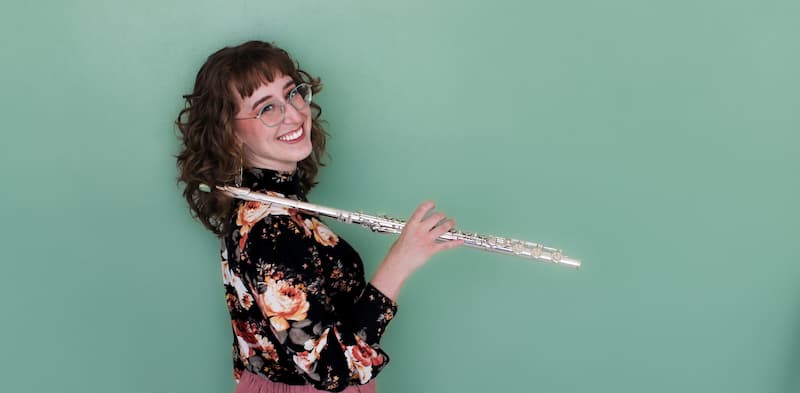
Rita Linard, Assistant Professor of Flute at The University of Texas at San Antonio, received her doctoral degree from the University of Texas in Austin, and also attended Indiana University, the University of Illinois and Northern Illinois University. She is a member of the Nova Trio, Sonora Flutes, and the Mid-Texas Symphony. Dr. Linard also performs with the San Antonio Symphony and Austin Lyric Opera. In the summer she is the director of the UTSA Flute Camp, plays in the Victoria (Texas) Bach Festival and teaches at Blue Lake Fine Arts Camp in Twin Lake, Michigan. Her performances have been broadcast on Michigan Public Radio and on National Public Radio’s “Performance Today”. 


Rebecca Knox, a native Texan, received her bachelor’s degree in voice performance from the University of Texas at Austin in 1997.  There she studied with professor William Lewis and sang roles such as Gretel in Hansel and Gretel and Sandrina in La Finta Giardiniera.  In 1998-1999 she was a young artist with Austin Lyric Opera while teaching privately in Leander, Texas.  She went on to complete a master’s degree in 2003 from the University of Colorado at Boulder where she studied with Patti Peterson and Curt Peterson.  There she sang Musetta in La Bohème and Pamina in The Magic Flute.  Most recently she made her professional debut as Rosina in The Barber of Seville in Boulder.  Currently Ms. Knox resides in New York City where she studies with Shirlee Emmons. 


A major portion of the equipment being used tonight was supplied by Krazy Kat Music, to whom we are extremely grateful. Go shop there.

Special thanks to Michael Tudyk, Mark Rubinstein and David Sebald for technical assistance above and beyond the call of duty; to Cindy Solis for her usual unflappability; to the UTSA Electronic Music Studio which is pretty much empty right now; and, most of all, to the performers and composers, without whom this would be a quiet evening.

Pre-concert music by Paul Lansky (Stroll). Introductory remarks created by Jack Stamps and David Heuser.

Tonight’s program is being broadcast through 100% post-consumer recycled air.